
RAID JAPAN POWER SLICE – A New Power-Focused Model Joins the SLICE Series
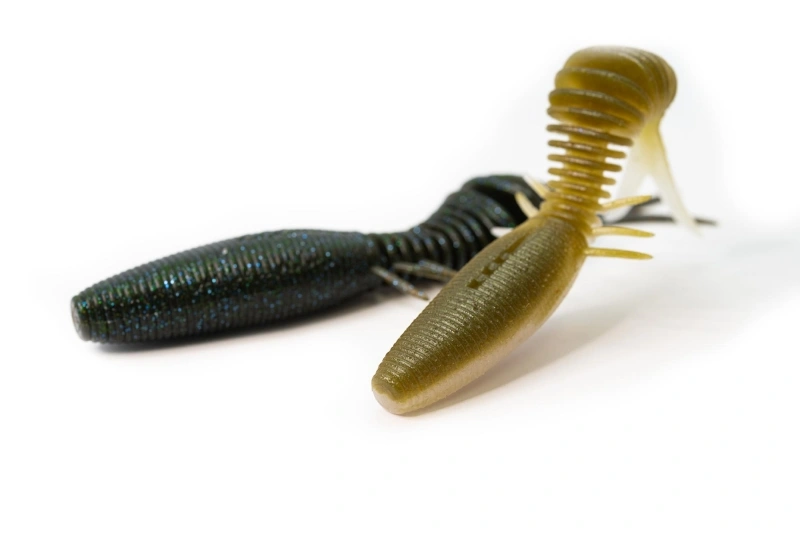
RAID JAPAN has released a new soft bait for 2026: the POWER SLICE.
The SLICE series is known for its unique segmented body design, which creates an extremely flexible and lifelike movement. POWER SLICE takes that concept in a more power-oriented direction, combining strong water displacement with a versatile body profile that can resemble both baitfish and crustaceans.
This makes it a bait that is not tied to one particular forage species or fishing style.
The most distinctive feature is the rear section of the body.
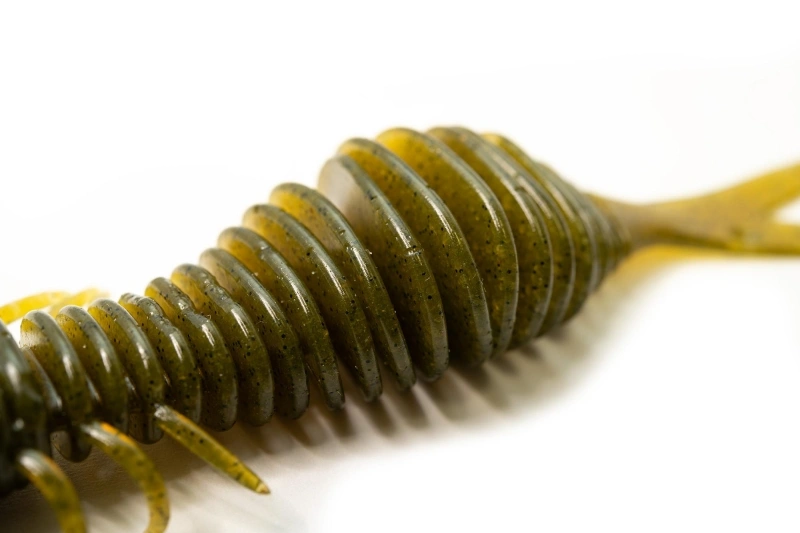
POWER SLICE uses a high-volume ribbed tail section designed to produce a strong pulsing action even in light current or with relatively light sinkers. The ribs allow the body to flex easily while creating noticeable water movement during the fall, retrieve, lift, or shake.
At the very end is an extreme V-shaped tail.
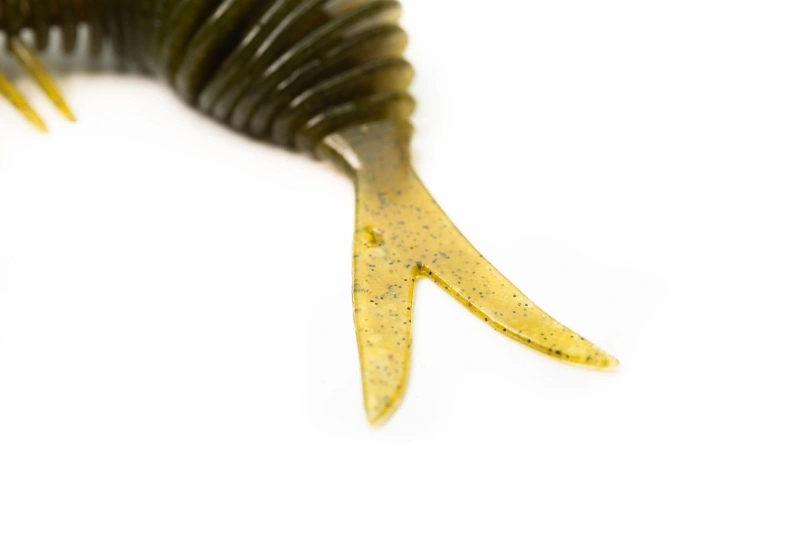
Rather than interfering with the main body action, the V-tail adds its own subtle movement. When worked along the bottom, the tail can also strike the substrate and help create disturbance, including small clouds of sediment.
Another important point is how continuously the bait can stay active.
POWER SLICE is designed to produce movement not only while swimming, but also during the fall, lift, shake, drag, and even while sitting on the bottom. That makes it suitable for a wide range of presentations rather than being restricted to one specific technique.
Recommended rigs include Texas rigs, Leaderless Down Shot rigs, Free Rigs, No-Sinker rigs, Heavy Down Shot rigs, Neko rigs, Heavy Carolina rigs, and jig trailers.
Two sizes are available:
POWER SLICE 3.9"
Recommended hook size: Offset #1/0–#2/0
POWER SLICE 4.8"
Recommended hook size: Offset #2/0–#3/0
For anglers looking for a soft bait that combines flexibility, strong water displacement, and a wide range of rigging options, POWER SLICE is an interesting new addition to the RAID JAPAN lineup.
RAID JAPAN POWER SLICE is now available.
NEW PRODUCT SPOTLIGHT 2026-08-30 14:00