
The Unique Boat Situation in Japanese Bass Tournaments
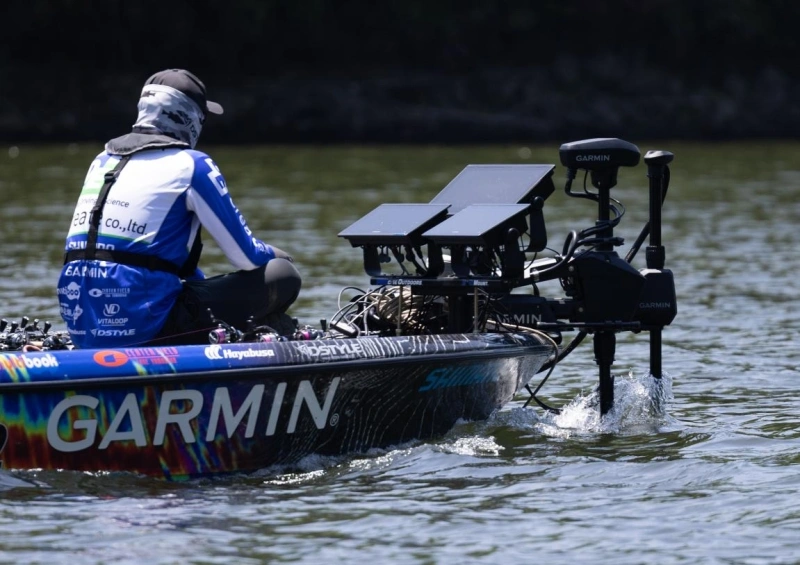
One of the most interesting things about Japanese bass tournaments is that the boats are not always the same.
In many countries, when people imagine top-level bass tournaments, they probably picture full-size bass boats with big outboards.
But in Japan, that is not always possible.
Many Japanese reservoirs have local regulations that do not allow gasoline engines.
Yasaka Dam in Yamaguchi Prefecture, where the recent JB TOP50 Round 2 was held, is one of those fields.
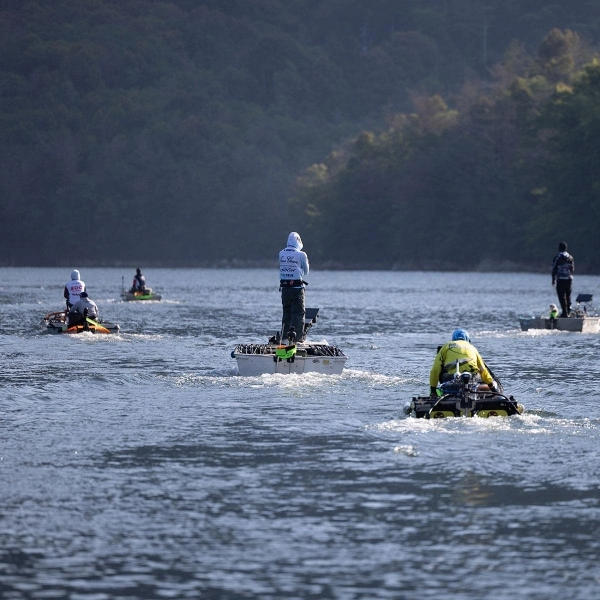
Because of that, the anglers competed from small 12-foot-class aluminum or FRP boats with no outboard engine.
They moved only by trolling motor.
At first glance, these boats may look simple.
But they are not simple at all.
Even on these small boats, top Japanese tournament anglers use the latest electronics. Large fish finders, forward-facing sonar, multiple displays, high-power trolling motors, and lithium batteries are now common at the highest level.
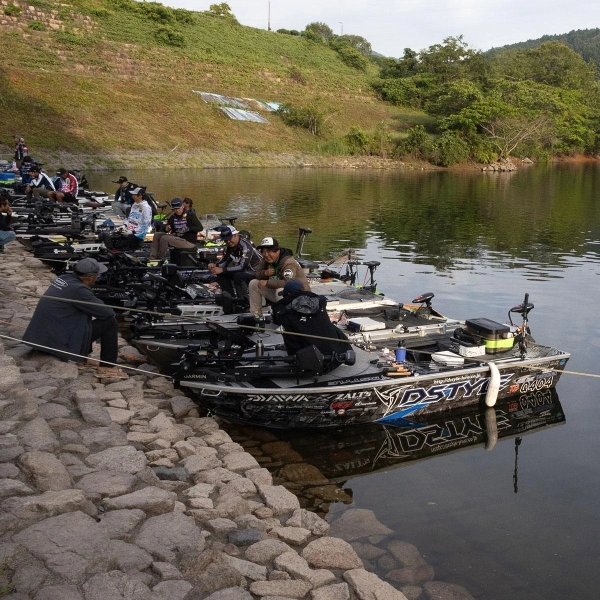
Japan has many world-famous outboard motor manufacturers, such as Yamaha, Suzuki, Honda, and Tohatsu.
Also, Furuno of Japan commercialized the world’s first practical fish finder in 1948.
However, today’s tournament scene has changed a lot.
Most high-end trolling motors and fishing electronics used by Japanese bass pros are now American brands.
And because the Japanese yen is very weak now, those imported products are extremely expensive in Japan.
For top-level anglers, the total cost of trolling motors, fish finders, sonar systems, batteries, mounts, wiring, and related equipment can be as expensive as a Toyota RAV4 or Harrier.
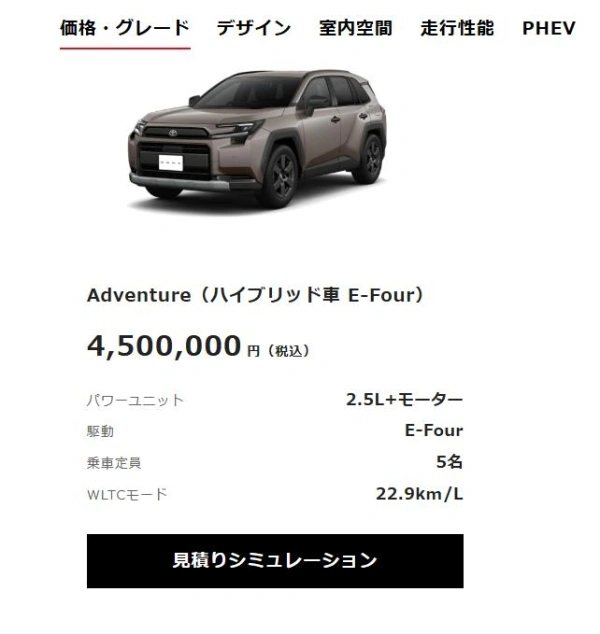
In other words, even a small Japanese tournament boat can carry the value of a new SUV in electronics.
Power is another important issue.
Since the boat has no outboard engine, the trolling motor must do almost everything.
That means anglers need a lot of battery power.
In the past, many anglers carried several heavy lead-acid batteries.
Each one could weigh around 25kg, and loading them into a small boat was very hard work.
Today, lithium batteries have made this much easier.
They are much lighter, more powerful, and much better suited for modern tournament fishing.
Proshop Otsuka was one of the pioneers in Japan in developing and selling lithium batteries specifically for bass fishing.
So this is a subject we know very well.
Another unique part of JB TOP50 is that the boat changes depending on the lake.
The previous JB TOP50 tournament allowed outboard engines up to 70hp, so anglers used small to mid-size boats.
At Yasaka Dam, they used small non-engine boats.
The next tournament will be held on a huge lake, so many anglers will use full-size bass boats.
This means Japanese top pros often need two or three different boat styles.
Of course, they do not own three complete sets of expensive electronics.
Before each tournament, they move their trolling motors, fish finders, batteries, mounts, and wiring from one boat to another.
It is a lot of work.
But this is also one of the reasons Japanese tournament anglers are so versatile.
They must compete from a full-size bass boat, a 70hp-class boat, or a small electric-only reservoir boat.
They must understand shallow rivers, deep reservoirs, huge lakes, engine-restricted waters, and highly pressured fish.
Japanese bass tournament fishing is not only about catching fish.
It is also about adapting to the field, the rules, the boat, and the equipment.
That is one of the most unique and difficult parts of fishing the JB TOP50 trail in Japan.
Japanese Bass Tournaments 2026-06-22 18:18